
Have you ever bought a piece of exercise equipment that eventually became an expensive clothes rack? It happens to the best of us. But a shift is happening in the world of spatial computing that changes this dynamic completely. Rather than forcing yourself to go to a gym, the gym now comes to you in a way that feels more like play than work.
We are seeing a massive pivot from pure gaming to daily lifestyle utility. While killing zombies is fun, using your headset to build a sustainable cardio routine or a daily meditation practice offers long-term value that justifies the hardware investment.
VR wellness involves using immersive technology to gamify physical exercise and mindfulness practices, effectively tricking the brain into enjoying effort. According to Grand View Research’s market analysis, the global VR fitness market size was valued at over $1.1 billion in 2023 and is expected to grow at a compound annual growth rate of 35.6% through 2030.
In this breakdown, you’ll learn how to configure your headset for fitness, which apps actually deliver results, and how to maintain a routine without wrecking your hardware with sweat.
What Is Spatial Wellness and Why It Matters for Habit Formation
Traditional workouts often fail because of friction. You have to pack a bag, drive to the gym, and wait for equipment. Spatial computing removes these barriers by placing you in a curated environment the moment you put on the headset. But it is not just about convenience; it is about psychological flow states.
Gamified fitness retention relies on immediate dopamine feedback loops that traditional exercise often lacks. Data from the VR Institute of Health and Exercise shows that high-intensity VR games like Supernatural or Thriller Fight can burn 10-15 calories per minute, which is metabolically equivalent to playing tennis or sprinting.
Core Components of VR Wellness
To turn a plastic headset into a wellness tool, three elements must work together:
- Immersion: Blocking out distractions (visual and auditory) to focus entirely on the movement.
- Feedback: Haptic vibrations and visual scores that reward correct form and timing instantly.
- Progression: Tracking metrics like calorie burn, streak days, and leaderboards over time.
For a deeper look at the hardware required to run these experiences smoothly, see our Guide to 2025 VR Headsets.
How VR Fitness Differs From Traditional Home Workouts
In a traditional home workout, you are staring at a 2D screen while being hyper-aware of your living room furniture. In spatial computing, your environment transforms. You aren’t doing squats in your basement; you are dodging obstacles on the surface of Mars or boxing in a neon arena.
This environmental shift reduces “perceived exertion.” You are working just as hard, but because your brain is focused on the target or the music, you notice the physical fatigue less. This makes it easier to push through the final five minutes of a workout compared to staring at a treadmill timer.
How VR Wellness Works: A Clear Breakdown
Understanding the mechanics behind these apps helps you choose the right one. It usually starts with room mapping. The headset cameras scan your play space to ensure you don’t punch a wall. Once established, the software overlays digital targets that correspond to music beats.
The Cardio Loop
Most fitness apps use a “beat-mapping” engine. Objects fly toward you in rhythm with a soundtrack. To interact with them – whether slashing, punching, or dodging – you must move your body. The apps force you to engage your core, squat to avoid overhead beams, and lunge side-to-side.
High-intensity VR training engages large muscle groups through dynamic, multi-planar movement patterns that traditional cardio machines miss. A study published in the Journal of Medical Internet Research found that participants using gamified VR exercise maintained a heart rate in the vigorous zone for 80% of the session duration on average.
The Mindfulness Mechanics
On the flip side, meditation apps use spatial audio and hypnotic visuals to induce calm. Instead of closing your eyes and struggling to focus, the headset gives you a visual anchor – like a glowing orb or a peaceful forest. This guides your breathing visually. As you inhale, the digital object expands; as you exhale, it contracts. It acts as training wheels for your brain.
Pro Tip: If you struggle with motion sickness, stick to “3 DOF” (Three Degrees of Freedom) meditation videos or apps where your virtual body remains stationary. This prevents the sensory mismatch that causes nausea.
VR Wellness in Practice: Real Applications
The software landscape has matured significantly. We aren’t just talking about tech demos anymore; these are full subscription services with daily content updates. However, choosing between them depends on your goals.
High-Intensity Cardio
Apps like Supernatural and Les Mills XR Bodycombat dominate this space. They offer coach-led classes that feel like a private studio session. The key differentiator is the coaching; real human voices encourage you, which creates a sense of accountability.
There is alot of variety here. Some apps focus on boxing mechanics, while others use “flow” mechanics where you swing batons or lightsabers. The best apps track your power and accuracy, ensuring you aren’t just flailing your arms but actually using force.
Subscription-based fitness apps have higher user retention rates compared to one-time purchase games. Industry data suggests that users of subscription services like Supernatural workout 40% more frequently than users who rely solely on static, non-updated fitness games due to the constant influx of new music and choreography.
Mindfulness and Mental Recovery
Apps like TRIPP and Maloka focus on the mind. TRIPP calls itself the “fitness app for your inner self.” It uses kaleidoscope-like visuals to disrupt ruminative thinking patterns. It is particularly effective for people who find it hard to “switch off” after work.
According to UploadVR’s analysis of wellness trends, the demand for non-gaming relaxation content has surged, with meditation app downloads on XR platforms increasing by over 25% year-over-year.
Getting Started with VR Wellness: What You Need
You cannot just grab a stock headset and expect a perfect gym experience. Sweat and electronics are natural enemies. To make this a daily habit, you need to “sweat-proof” your setup.
Essential Requirements
Before your first workout, address the hygiene issue. The stock facial interface (the foam part that touches your face) acts like a sponge. It will absorb sweat, smell bad, and eventually cause skin irritation.
Silicone facial interfaces are mandatory accessories for VR fitness to prevent bacterial buildup and sweat damage. Medical hygiene standards for shared HMDs (Head Mounted Displays) recommend non-porous, wipeable surfaces, which reduce bacterial load by over 99% compared to porous stock foam.
The specifications of your headset also matter for comfort during active movement:
Headset weight distribution is the critical factor for fitness comfort, more so than total weight. The Meta Quest 3 weighs 515 grams with a 40% slimmer optic profile than its predecessor, keeping the center of gravity closer to the face, which significantly reduces neck strain during rapid head movements compared to the front-heavy Quest 2.
Your Starter Kit:
- Silicone Cover: Easy to wipe down with antibacterial wipes.
- Knuckle Straps: Allows you to open your hands without dropping controllers (crucial for “flow” workouts).
- Headband/Sweatband: Wear a physical sweatband under the headset to stop moisture from dripping onto the lenses.
- Fan: A floor fan directed at your play space helps orient you and keeps you cool.
Common Mistakes to Avoid
Don’t jump into “Expert” difficulty immediately. You might have the cardio for it, but your tendons need time to adjust to the specific repetitive motions of VR. Also, ensure your boundary is set conservatively. You will move more than you think.
For more on maintaining your gear, check out our guide on How to Clean Your VR Headset Properly.
Which Wellness App Is Right for You?
With so many options, it helps to have a framework for decision-making. Here is how to choose based on your personality and budget.
Choose Subscription Apps (Supernatural, FitXR) if you:
- Need new music and choreography daily to stay motivated.
- Respond well to human coaches and vocal encouragement.
- Want detailed tracking and a companion phone app.
- Have a budget for a monthly fee ($10-$20/month).
Choose One-Time Purchase Apps (Beat Saber, Thrill of the Fight) if you:
- Prefer to pay once and own the content forever.
- Want to mod the game with your own custom songs.
- Dislike hearing coaches talk while you exercise.
- Are okay with playing the same levels repeatedly to chase high scores.
The Future of VR Wellness: Where Things Are Heading
The next phase of spatial wellness is Mixed Reality (MR). With headsets like the Quest 3 and Apple Vision Pro, you no longer need to be blind to the world. You can see your living room, but the instructor is a hologram standing in front of you. This reduces the claustrophobia some users feel and makes it safer to move vigorously in smaller apartments.
Mixed Reality fitness blends digital workout elements with the physical environment, allowing for safer movement in constrained spaces. The Verge’s 2023 review of the Quest 3 highlighted that high-fidelity color passthrough fundamentally changes fitness apps, enabling users to interact with equipment like dumbbells or yoga mats while viewing digital overlays.
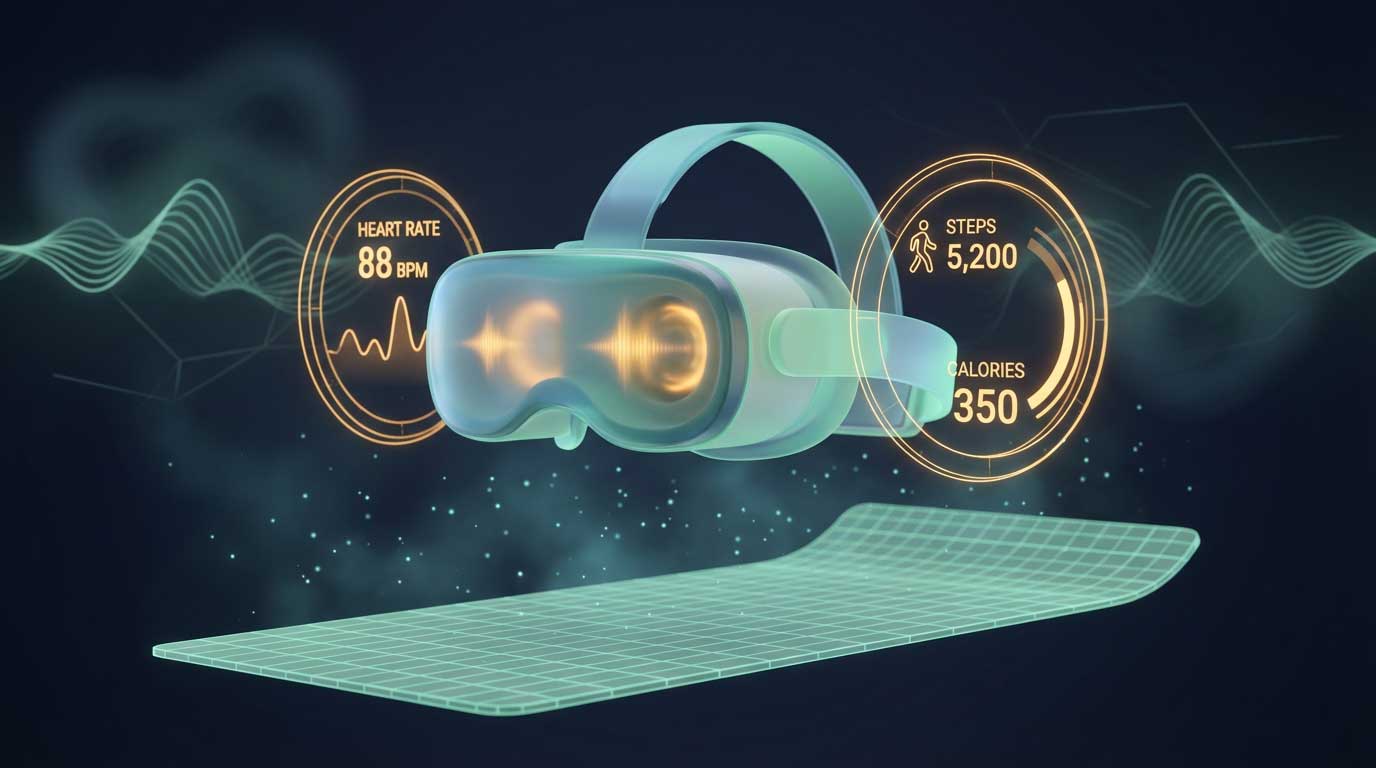
We are also seeing early integration with wearable tech. Soon, your Apple Watch or Garmin data will overlay directly into your headset view, showing real-time heart rate zones without needing a chest strap.
Quick Takeaways
- Burn 400+ calories an hour: High-intensity VR apps rival tennis or rowing for metabolic output.
- Consistency beats intensity: The gamification element (streaks, leaderboards) increases adherence to the routine.
- Buy a silicone cover immediately: Protect your skin and your headset from sweat damage; stock foam is not hygienic for fitness.
- Start with Mixed Reality: If you have a small space, use MR mode to avoid punching walls or furniture.
- Use 3 DOF for meditation: Stationary experiences reduce the risk of motion sickness during relaxation.
- Choose based on budget: Subscriptions offer coaching and new music; one-time purchases save money but lack daily updates.
Frequently Asked Questions
What is VR wellness?
VR wellness is the use of immersive technology to improve physical and mental health. It combines gamified exercise apps that burn calories with mindfulness experiences that reduce stress. By 2025, it has become a primary use case for spatial computing hardware.
How does VR fitness compare to a gym workout?
While a gym offers heavy resistance training, VR fitness excels at cardio and agility. You can burn 10-15 calories per minute in VR, similar to running. However, VR is generally superior for motivation due to gamification, while gyms are better for building raw muscle mass.
What are the best use cases for VR wellness?
The best use cases are high-intensity cardio (boxing, dancing) and stress reduction (guided meditation). It is also excellent for “stealth fitness,” where you exercise without realizing it because you’re focused on a game, and for users with social anxiety who prefer working out at home.
What do I need to get started with VR wellness?
You need a standalone headset like a Meta Quest 3 or Pico 4 (starting around $500). Essential accessories include a silicone facial interface for hygiene and a comfortable head strap. You also need a clear play space of at least 6×6 feet for safe movement.
How comfortable is VR fitness for extended use?
It depends on the headset balance. Front-heavy headsets can cause neck strain after 20 minutes. However, newer devices with “pancake lenses” are slimmer and lighter. Using a counterbalance battery strap and a fan can make sessions of 45-60 minutes very comfortable.
What specifications matter most for VR fitness?
Prioritize weight distribution and “passthrough” quality. A balanced headset reduces neck fatigue during active movement. High-quality color passthrough allows you to see your surroundings, making it safer to move vigorously without hitting furniture.
What developments are coming for VR wellness?
Expect deeper integration with wearable health trackers (Apple Watch, Fitbit) for real-time heart rate overlays. Also, “co-location” features will allow two people in the same room to work out together in the same virtual space using mixed reality.
Next Steps: Ready to start your routine? Begin by purchasing a silicone cover for your headset, then download a free trial of a rhythm game to test your comfort level. For more guidance on hardware, explore our Best VR Accessories Guide